Why Choose Microfiber Cleaning Cloth for Your Cleaning Needs?
Microfiber cleaning cloths have gained popularity in both household and professional cleaning. According to the American Cleaning Institute, 88% of cleaning professionals recommend microfiber for its superior performance. These cloths are made from millions of tiny fibers, enabling them to trap dirt and absorb moisture effectively.
One study shows that microfiber can remove up to 99% of bacteria from surfaces without chemicals. This not only leads to a cleaner environment but also promotes health and safety. As the demand for eco-friendly cleaning solutions grows, using microfiber cleaning cloths becomes more relevant.
However, there are caveats to consider. Improper washing can degrade their effectiveness. Many users may not realize that fabric softeners can reduce the cloth's ability to absorb. Therefore, investing in microfiber cleaning cloths means understanding their care requirements too. This understanding leads to longer-lasting performance and better cleaning results.
Benefits of Using Microfiber Cleaning Cloths in Everyday Cleaning
Microfiber cleaning cloths are rapidly gaining popularity in everyday cleaning tasks. They are designed to trap dirt, dust, and moisture effectively. This unique ability is due to the tiny fibers that are split many times smaller than a human hair. Such fibers create a larger surface area, ensuring better cleaning performance. This feature is particularly useful for homes with pets or children, where messes are more common.
Another advantage of microfiber cloths is their reusability. With proper care, these cloths can be washed multiple times. This not only reduces waste but also saves money spent on disposable products. However, it's important to recognize that they require specific washing instructions to maintain their effectiveness. Using fabric softeners can degrade their cleaning ability over time, a detail often overlooked by users.
Microfiber cloths are also hypoallergenic, making them ideal for individuals with allergies. They can capture allergens like dust mites and pollen without releasing them back into the air. Yet, some people find the materials less durable than expected and might need to replace them sooner than planned. This highlights the importance of understanding the proper usage and care of microfiber products for the best results.
Composition and Structure of Microfiber: Why It Matters for Cleaning
Microfiber cleaning cloths consist of extremely fine fibers, typically 1/100th the diameter of a human hair. This unique composition provides exceptional cleaning capabilities. Research by the International Association of Certified Home Inspectors states that microfiber can remove 99% of bacteria from surfaces, while traditional cloths only eliminate about 30%. The secret lies in microfiber's structure, featuring split fibers that create a larger surface area for trapping dust and grime.
When using microfiber cloths, it’s essential to consider a few tips. Always wash them in hot water to maintain their effectiveness and avoid fabric softeners, which can clog the fibers. This ensures they perform their best. Additionally, using a different cloth for different areas can prevent cross-contamination. Remember, not all microfibers are created equal, and some may wear out faster than others.
Despite their advantages, be cautious. Not all cleaning tasks require microfiber. In certain situations, such as heavy-duty scrubbing, other materials might be more suitable. A balanced approach to choosing cleaning materials can enhance overall efficacy. Keep experimenting with different cleaning methods, as it helps refine your cleaning strategy. Choose wisely and observe what works best in your space.
How Microfiber Cloths Effectively Trap Dirt and Dust Particles
When it comes to cleaning, microfiber cloths stand out. They are designed to trap dirt and dust effectively. The secret lies in their unique structure. Each microfiber strand is split into tiny fibers, creating a large surface area. This helps them capture and hold onto particles more efficiently than traditional cloths.
Microfiber cloths can absorb up to seven times their weight in water. They are lightweight and durable, making them easy to use. You can use them for various surfaces, from countertops to electronics. This versatility is a significant advantage in cleaning tasks. However, they can sometimes leave streaks on shiny surfaces. Testing a small area first is wise.
Tips for using microfiber cloths:
1. Wash them separately to avoid lint transfer.
2. Avoid using fabric softeners, as they can damage the fibers.
3. Regularly check for wear and tear, as old cloths may not perform well.
Microfiber cleaning cloths are not perfect. Over time, they can lose their effectiveness if not cared for properly. Paying attention to maintenance is essential for getting the most out of them.
Comparing Microfiber Cloths to Traditional Cleaning Materials
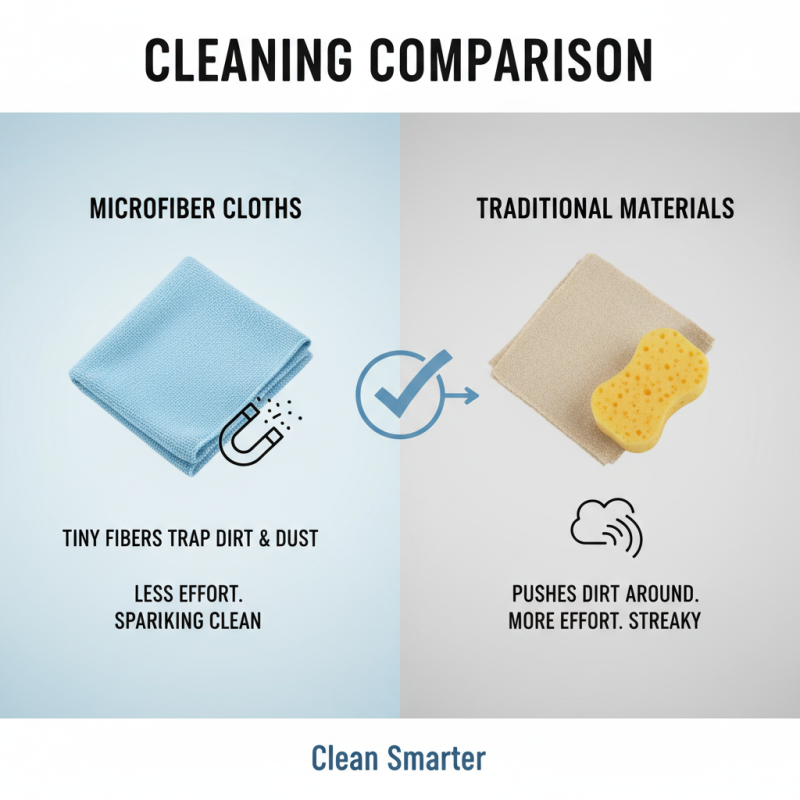
Microfiber cloths have become a popular choice for cleaning tasks. Unlike traditional cleaning materials, these cloths offer unique advantages. They are made of tiny fibers that trap dirt and dust effectively. This means you will use less effort while achieving a sparkling clean surface.
When comparing microfiber cloths to cotton rags or paper towels, you quickly see the benefits. Microfiber absorbs moisture better than cotton, making it ideal for spills. It also works well with just water, reducing the need for harsh chemicals. However, microfiber does require some special care. Washing them improperly can reduce their effectiveness. It’s best to follow care instructions closely to maximize their lifespan.
Tips to use microfiber effectively: Always use the appropriate cloth for the task. A plush microfiber is great for dusting, while a flat weave is perfect for scrubbing surfaces. Avoid fabric softeners, as they can clog the fibers. Aim for a dedicated basket for dirty cloths to keep them organized. This helps ensure you have clean cloths ready for your next cleaning session. Adjusting your cleaning habits can lead to better results.
Proper Care and Maintenance of Microfiber Cleaning Cloths for Longevity
Microfiber cleaning cloths have become a staple in household cleaning. They are highly effective because they trap dirt and dust efficiently. However, the longevity of these cloths relies heavily on proper care and maintenance. According to a report by the International Scientific Research Journal, microfiber can last up to 500 wash cycles when cared for appropriately. This means taking steps to ensure they remain in top condition.
Washing microfiber cloths requires attention. Use warm water and a gentle detergent without fabric softeners. Fabric softeners can clog the fibers and reduce their effectiveness. It’s also essential to avoid high-temperature drying. Instead, opt for air drying or a low heat setting in the dryer. Rinsing cloths immediately after use helps remove dirt effectively and extends their lifespan.
Tips for keeping microfiber cloths in good shape: Store them in a dry place to prevent mold. Avoid using them on surfaces with sharp edges, which can damage the fibers. If stains persist after washing, a vinegar solution can help break down stubborn residues without harming the cloth. Regular maintenance not only ensures performance but also reflects a commitment to sustainable cleaning practices. Remember, poorly maintained microfiber cloths can become less effective over time, impacting their cleaning efficiency.