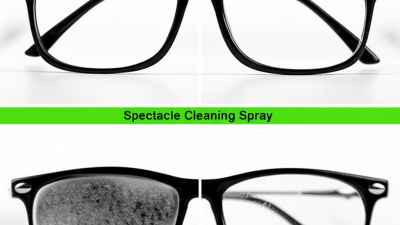
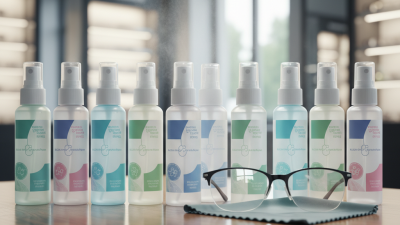
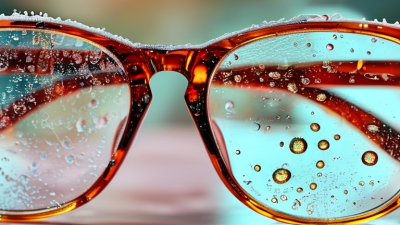
Lens Cleaner Spray is often treated as a small accessory, yet it plays an important role in daily eyewear care. A clear lens can collect fingerprints, skin oils, dust, and fine particles within hours. These marks may create glare, reduce contrast, and encourage users to rub harder. That habit can damage delicate coatings over time.
Optometrist and contact-lens researcher Dr. Joseph A. Barr emphasizes, “Clean lenses are essential for clear vision and comfortable wear.” His statement reflects a practical truth. Effective cleaning is not only about removing visible dirt. It also involves protecting anti-reflective, blue-light, tinted, or scratch-resistant surfaces.
So, how does Lens Cleaner Spray work? Most formulas combine purified water with mild cleaning agents. These ingredients loosen oily residue and help lift dust from the lens surface. The liquid does not repair scratches. It also cannot make every coating permanently resistant to damage. That distinction matters.
A typical routine is simple. Blow away loose particles first. Spray lightly onto a clean microfiber cloth or follow the product label. Wipe gently, using small movements. Avoid tissues, shirt sleeves, and strong household chemicals. They may leave fibers, streaks, or microscopic abrasions.
Not every spray suits every lens.
This article will examine common ingredients, safe application methods, coating compatibility, and practical limitations. It will also question a common assumption: more spray does not always mean cleaner lenses. Sometimes, careful technique matters more than the bottle.
What Is Lens Cleaner Spray and How Does It Work?
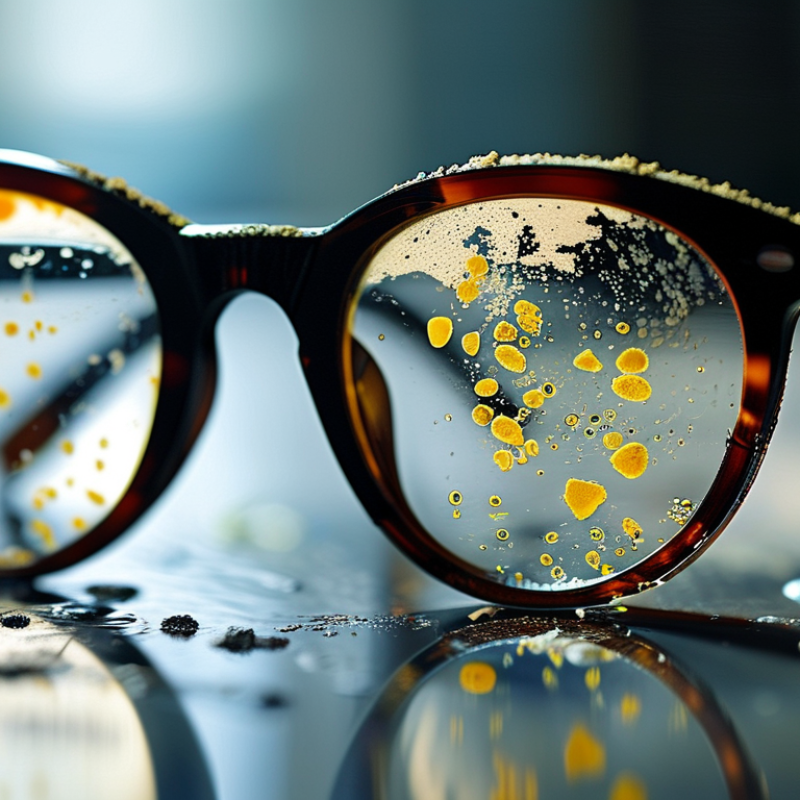
Lens cleaner spray is a liquid designed to loosen oils, dust films, and dried marks from optical surfaces. Its main ingredient is usually purified water. Water softens soluble residue and carries loosened particles away. However, water alone spreads skin oil instead of removing it.
Surfactants solve that problem. These molecules reduce surface tension, helping the liquid wet the lens evenly. They surround grease and suspend it in tiny droplets. A clean microfiber cloth can then lift those droplets. Many formulas also contain a small amount of alcohol. Alcohol can dissolve stubborn oils and evaporate quickly, leaving fewer streaks. The percentage matters. Too much alcohol may affect coatings, plastics, seals, or adhesive layers. The exact risk depends on the lens material.
In practical use, spray the cleaner onto the cloth, not directly onto the lens, especially around frame edges. Use gentle, overlapping strokes. A gritty particle can scratch more than a fingerprint. I have found that people often use too much liquid, then blame the formula for cloudy results. That criticism is sometimes fair, because some blends dry unevenly. Still, no spray suits every coating. Check the lens maker’s care guidance, and test an inconspicuous area when the material is uncertain.
What Is Lens Cleaner Spray and How Does It Work?
Lens cleaner spray is a carefully balanced liquid for removing fingerprints, skin oils, dust residue, and light smears from optical surfaces. It usually contains purified water, mild surfactants, and sometimes a small amount of compatible solvent. The formula must clean effectively without leaving a film or damaging delicate coatings.
At room temperature, pure water has a surface tension of about 72.8 mN/m. This tension makes water bead instead of spreading smoothly across a lens. Surfactant molecules reduce that tension. One end bonds with water, while the other end interacts with oily residue. The spray then spreads into thin gaps around a fingerprint. Gentle wiping can lift and carry away the loosened oil.
The chemistry is more practical than dramatic. A dry lens may show a cloudy thumbprint. After one light spray, the mark becomes a soft, wet haze. A clean microfiber cloth can then remove it with less pressure. Water does not truly dissolve oil by itself. Surfactants help surround tiny oil particles and keep them suspended for removal. The explanation is useful, but incomplete. Different coatings react differently, and too much liquid may seep into lens edges. A careful user should spray the cloth, not flood the optical surface.
Surface tension determines how easily a liquid spreads across a lens. Pure water has a surface tension of approximately 72.8 mN/m at 20°C. Lens-cleaning formulas commonly use surfactants to lower water’s surface tension, improving wetting and helping lift oily fingerprints and residue.
Reference values shown are approximate surface-tension values for pure liquids at about 20°C. Actual lens-cleaner performance depends on the formulation, surfactant type, concentration, temperature, and the oil or residue being removed.
What Is Lens Cleaner Spray and How Does It Work?
Lens cleaner spray is a diluted liquid designed to lift fingerprints, skin oil, dust residue, and light smudges. Most formulas combine purified water with mild surfactants. These ingredients loosen oily films without requiring hard rubbing. A good spray should dry evenly and leave minimal residue.
Coating safety matters more than a sparkling first impression. Modern lenses may include anti-reflective, hard, UV-filtering, or water-repellent layers. ISO 9211 describes methods for evaluating optical coating performance and durability. However, it is not a universal certification for every cleaning spray. Compatibility must match the coating material and its tested care instructions.
pH control is important. A near-neutral formula, often around pH 6 to 8, is generally gentler than strongly acidic or alkaline liquids. Still, pH alone does not prove safety. Surfactant type, solvents, preservatives, and repeated exposure also matter. A label can sound reassuring.
In practice, blow away loose grit first. Spray the cleaner onto a clean, lint-free cloth, not directly onto electronic frames or lens edges. Wipe with light pressure, using short strokes. I have found that rushing this step can drag fine particles across the surface. Avoid household glass cleaners, abrasive tissues, and unknown mixtures. When coating damage appears, cleaning cannot reverse it. Check the product’s technical data and the lens maker’s care guidance before regular use.
| Data Dimension | Typical Value or Range | How It Works or Why It Matters | Lens and Coating Safety Guidance |
|---|---|---|---|
| Primary Purpose | Removal of fingerprints, skin oils, dust residue, and light water marks | The liquid wets the surface, loosens oily or particulate contamination, and allows the residue to be lifted away with a clean microfiber cloth. | Use a product specifically formulated for ophthalmic lenses and coated optical surfaces. |
| Main Carrier | Purified, deionized, or distilled water; commonly the largest formulation component | Water dissolves water-soluble residues and distributes the cleaning ingredients evenly across the lens surface. | A low-mineral water base helps reduce drying spots and unwanted deposits. |
| Surfactant System | Usually a low concentration, often below 1% in ready-to-use sprays | Surfactants reduce surface tension and surround oily soil so that it can be removed without aggressive rubbing. | Mild, non-abrasive surfactants are generally preferred for anti-reflective, hard, and water-repellent coatings. |
| Alcohol Content | May be absent or present at a low-to-moderate level, depending on the formulation | Alcohol can improve drying and help dissolve some oily residues, but its effect depends on concentration, exposure time, and coating construction. | Do not assume that every alcohol-containing cleaner is safe. Follow the lens or coating supplier’s care instructions and avoid prolonged soaking. |
| Ammonia | Preferably absent in products intended for coated ophthalmic lenses | Ammonia is alkaline and can increase chemical stress on some coatings, adhesives, plastics, and surface treatments. | An ammonia-free formulation is a prudent selection for anti-reflective and multilayer coated lenses. |
| pH Control | Approximately pH 6.5–8.0 is a practical mild-cleaner target | A near-neutral formulation reduces the risk of acid- or alkali-related changes to coatings, lens materials, and bonding layers. | pH should be measured on the finished product. A near-neutral pH does not by itself prove complete coating compatibility. |
| Abrasive Particles | Should be absent | Abrasives can create fine scratches, haze, or permanent changes in the optical surface during wiping. | Avoid powders, polishing compounds, gritty pastes, and household cleaners containing abrasive solids. |
| Spray Droplet Function | Fine, even mist rather than a high-pressure jet | A controlled spray distributes a small amount of liquid and helps prevent excess fluid from entering frame joints or electronic components. | Spray onto the lens or microfiber cloth as directed; avoid saturating the frame, pad arms, and hinge areas. |
| Cleaning Mechanism | Wet, dissolve, lift, and wipe | The cleaner softens contamination, while the microfiber cloth physically removes the loosened material from the surface. | Rinse or blow off loose grit first, then wipe gently with a clean lens-safe microfiber cloth. |
| Recommended Contact Time | Short exposure; normally a few seconds before wiping | Short contact allows the formulation to loosen soil without unnecessarily exposing the coating to liquid chemicals. | Avoid leaving wet cleaner on the lens until it evaporates, especially in heat or direct sunlight. |
| Coating Compatibility | Must be evaluated for the specific lens material, hard coat, anti-reflective stack, and topcoat | Coatings may contain multiple layers with different chemical and mechanical properties. A formula that is safe for one construction may not be validated for another. | Check care instructions and use compatibility testing rather than relying only on pH or ingredient presence. |
| ISO 9211 Relevance | Compatibility should be demonstrated through applicable coating performance and durability methods | ISO 9211 is associated with ophthalmic spectacle-lens coating terminology, requirements, and evaluation methods across its relevant parts. It is not a universal approval label for every cleaning spray. | A cleaner should not be described as “ISO 9211 certified” unless a specific, documented test scope and applicable standard part support that statement. |
| Typical Compatibility Checks | Appearance, adhesion, abrasion resistance, chemical resistance, and optical performance | Testing can identify haze, color change, delamination, loss of water repellency, surface damage, or changes in optical transmission and reflection. | Use controlled repeated-spray and wipe cycles, followed by inspection and comparison with an untreated control sample. |
| Lens Materials | Glass, polycarbonate, high-index plastics, and other ophthalmic polymer lenses | Different materials and hard coats respond differently to solvents, temperature, moisture, and mechanical wiping. | Validate the complete lens system rather than testing the base lens material alone. |
| Microfiber Cloth Requirement | Clean, soft, lint-free, and free from embedded particles | The cloth removes loosened soil while minimizing the risk of scratches and streaks. | Wash the cloth regularly without fabric softener and replace it when it becomes contaminated or worn. |
| Storage Stability | Keep tightly closed at moderate temperature and protect from freezing, excessive heat, and direct sunlight | Temperature and light can affect evaporation, spray performance, preservative stability, and formulation uniformity. | Inspect for cloudiness, separation, odor change, or precipitated material before use. |
| Avoided Ingredients or Practices | Strong acids, strong alkalis, ammonia-based cleaners, abrasive particles, and unverified solvents | These conditions can increase swelling, extraction, discoloration, haze, delamination, or loss of topcoat performance. | Never use household glass cleaner, paint thinner, acetone, or abrasive polishing products on coated ophthalmic lenses unless specifically approved. |
| Practical Safety Sequence | 1. Remove loose dust 2. Apply a small amount of cleaner 3. Wipe gently 4. Inspect under good light | This sequence reduces the chance of dragging abrasive particles across the lens and limits unnecessary chemical exposure. | Stop using the product if repeated use causes streaking, haze, tackiness, coating damage, or frame discoloration. |
Note: The values shown are practical formulation and handling ranges, not universal specifications. Final compatibility should be confirmed through the applicable ISO 9211 test scope, the lens manufacturer’s care instructions, and documented repeated-use testing on the complete coated lens system.
Lens cleaner spray is a low-residue liquid made for coated optical surfaces. It loosens skin oil, dust, and dried droplets before wiping. The spray reduces friction, but it does not make a dirty cloth safe. The Vision Council’s 2024 consumer research reports that roughly three in four U.S. adults use vision correction. That makes careful daily cleaning a practical maintenance habit, not a cosmetic extra.
Use the method: spray, wipe, and dry. First, wash and dry your hands. Blow away loose grit. Apply one or two light sprays to the lens or a clean microfiber cloth. Avoid soaking edges, vents, and electronic openings. Wipe from the center outward with gentle, straight strokes. Turn the cloth often. Let the surface air-dry, then check it under a bright lamp. Never use a shirt sleeve or paper towel. Tiny trapped particles can act like sandpaper. My rushed wipes have left faint smears before, so “clean” is not always clean enough.
Tips: Follow the cleaner’s optical-surface instructions. The American Optometric Association advises using suitable lens-cleaning materials and avoiding harsh household chemicals. Rinse a visibly gritty lens first, if the lens maker permits it. Wash microfiber cloths separately, without fabric softener. Replace them when they feel stiff or collect debris. A 2023 report from The Vision Council also links frequent eyewear use with regular cleaning needs, but frequency alone does not justify aggressive rubbing. Gentle pressure matters more.
What Is Lens Cleaner Spray and How Does It Work?
Lens cleaner spray usually combines water, mild surfactants, and fast-evaporating solvents. The liquid loosens skin oil, dust films, and dried fingerprints. A clean microfiber cloth then removes the softened residue. The process sounds simple, but optical performance needs measured evidence.
ASTM D1003-21 defines haze as light scattered away from the direct beam by more than 2.5 degrees. It also measures luminous transmittance through the tested surface. A practical test records haze and transmission before cleaning, then repeats both measurements after drying. Lower haze can reveal fewer micro-droplets or streaks. Higher transmission may indicate better removal of the oily film. ISO 13468-1 also provides guidance for total luminous transmittance measurements. Results can shift with lamp geometry, sample curvature, cloth pressure, and drying time. That detail matters. A single impressive reading is not proof.
Tips: Use identical lenses or test panels. Record temperature, spray volume, wiping strokes, and waiting time. Avoid spraying directly onto sensitive assemblies. Test three or more cycles and report the average, range, and visible streak count. I would also photograph the surface under angled light. Numbers sometimes miss a thin rainbow-like film. That weakness deserves attention, especially when haze changes by only a few tenths of a percent.