Why is Optical Equipment Essential for Modern Technology?
In the rapidly evolving landscape of technology, Optical Equipment plays a pivotal role. A report from Research and Markets indicates that the global optical equipment market is projected to reach $24 billion by 2025. This growth underscores the importance of optical components in sectors like telecommunications, healthcare, and consumer electronics.
Optical Equipment encompasses lasers, lenses, and fiber optics, driving innovations across various industries. For instance, in telecommunications, fiber optics facilitate high-speed data transmission. The medical field also relies heavily on optical devices for surgeries and diagnostics, improving patient outcomes significantly. Yet, despite these advancements, challenges persist.
The integration of Optical Equipment can be complex and costly. Some organizations struggle with effective utilization. Training personnel and maintaining these sophisticated tools requires ongoing investment. As technology progresses, ensuring access and understanding of these optical technologies will be vital for sustained growth and innovation.
The Role of Optical Equipment in Communication Technologies
Optical equipment plays a pivotal role in modern communication technologies. The backbone of our internet connections relies on fiber optics. These thin strands carry light signals over vast distances. This is crucial for data transmission, ensuring speed and clarity.
In addition, optical components enable advanced technologies like lasers and sensors. Lasers are integral for high-speed data transfer in networks. Sensors powered by optics improve our ability to monitor environmental changes. They enhance surveillance, healthcare, and industrial applications.
However, the reliance on such technology raises questions. Are we prepared for the potential vulnerabilities? What happens if the optical infrastructure fails? These are crucial issues we must navigate as we embrace the future. Understanding the importance of optical equipment is key, but so is addressing its limitations. Balancing innovation with caution is essential in this rapidly evolving field.
Advancements in Medical Imaging and Diagnosis Through Optical Equipment
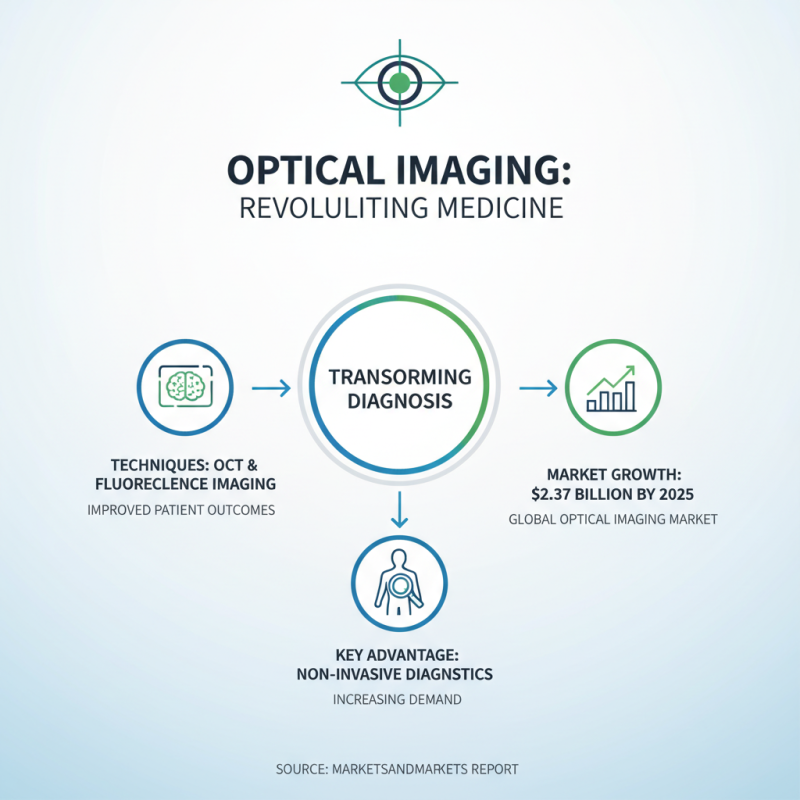
Optical equipment has transformed medical imaging and diagnosis in recent years. Techniques like optical coherence tomography (OCT) and fluorescence imaging have improved patient outcomes. According to a report by MarketsandMarkets, the global optical imaging market is projected to reach $2.37 billion by 2025. This rapid growth reflects the increasing demand for non-invasive diagnostic tools.
These advancements allow doctors to visualize tissues in real-time. They can diagnose conditions earlier, which often leads to better treatment options. For instance, OCT is widely used for eye examinations, helping detect diseases like macular degeneration. Accurate imaging aids in planning surgical interventions, contributing to improved success rates. There is, however, a risk of over-reliance on technology, which can overshadow traditional diagnostic skills.
Tip: Ensure your medical team balances technology with clinical expertise. Continuous training is vital to maximize the benefits of optical tools. Data from the American College of Radiology suggests that ongoing education leads to increased diagnostic accuracy.
Imaging technologies also face challenges, like the cost of new equipment. Many facilities struggle to keep up with rapid advancements. Regular updates and maintenance are essential, yet budgets often limit these investments. It's crucial to assess the quality of imaging services regularly.
The Importance of Optical Devices in Consumer Electronics
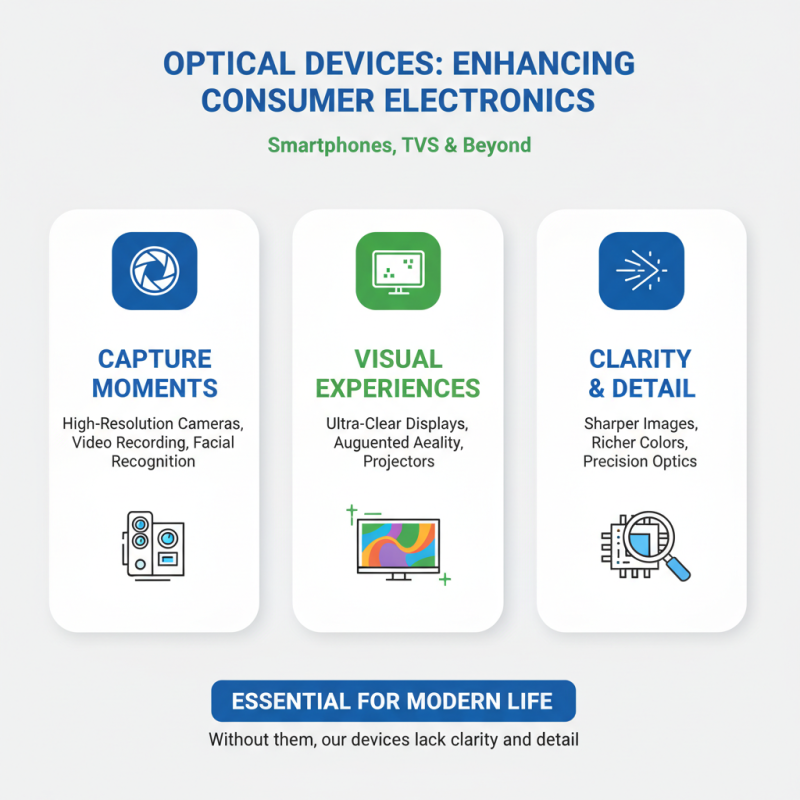
Optical devices play a crucial role in today's consumer electronics. From smartphones to TVs, these devices enhance our daily experiences. They allow us to capture moments through cameras and enjoy vibrant displays. Without optical technology, our devices would lack clarity and detail.
Consider this: your smartphone’s camera uses optical components to focus light. This process transforms a simple moment into a high-resolution image. Yet, many don’t realize how these components work together. Understanding this can deepen your appreciation for the technology.
Tips: Keep your lenses clean. A smudge can ruin a great shot. Also, explore settings on your devices to maximize their optical features.
In virtual reality, optics provide immersive experiences. The lenses create depth and realism. However, some users may feel discomfort due to prolonged use. It's important to take breaks and adjust settings to suit your comfort. This reflection can improve your overall experience.
Optical Equipment in Industrial Applications and Manufacturing
Optical equipment plays a crucial role in industrial applications and manufacturing. Its impact on precision and efficiency cannot be overstated. Lasers, lenses, and other optical devices enhance quality control. They are essential in processes like cutting, welding, and measuring. These tools allow for accurate assessments, ensuring products meet exact specifications.
In manufacturing, optical technology is frequently used for automation. Machine vision systems utilize cameras to inspect products. This process significantly reduces human error. However, relying solely on optical systems can pose challenges. Calibration and maintenance are often overlooked. Regular checks can prevent costly downtime.
Tips: Always invest in quality calibration tools. They ensure your optical devices function accurately. Also, train your staff on the latest optical technologies. Staying updated can lead to better production outcomes. Embrace the potential of optical equipment, but remain vigilant of its limitations. This balance is vital for success in modern manufacturing.
Enhancing Scientific Research with Optical Instruments and Technologies
Optical instruments play a vital role in scientific research today. They enhance our understanding of the natural world. Microscopes, for example, reveal details invisible to the naked eye. They allow scientists to explore cellular structures, leading to breakthroughs in biology. High-resolution imaging enables the observation of interactions at microscopic levels.
In fields like astronomy, optical technologies are equally crucial. Telescopes capture light from distant stars and galaxies, offering insights into the universe's origins. Each image tells a story; however, interpreting these images can be challenging. Data often requires careful analysis and can lead researchers down complex paths. The journey can be messy, demanding patience and critical thinking.
Despite advancements, some limitations persist. Optical equipment can be costly and requires precise calibration. Inadequate training can lead to errors in data collection. This calls for ongoing education and adaptability among researchers. Embracing imperfections and learning from mistakes can unlock new possibilities. Through these optical tools, science continues to evolve, shaping our understanding of reality.
Importance of Optical Equipment in Scientific Research