A Glasses Pouch may seem like a small accessory, but it can shape how easily you carry and protect your eyewear. Its size, lining, closure, and structure all matter. A snug fit helps limit movement, while a soft interior can reduce contact with dust and minor surface scratches. Fit matters.
Different designs suit different routines. Soft microfiber sleeves are lightweight and easy to slip into a pocket or handbag. Drawstring pouches open quickly, though they may offer less structure. Hard-shell cases take up more room but can help shield frames from pressure in a crowded bag. Zippered and folding styles offer other trade-offs between access, storage space, and protection. There is no perfect pouch for every pair.
This guide explores the top types of glasses pouches and the details worth checking before you choose one. It considers everyday handling, frame shape, lens size, and where the pouch will be carried. A pouch that works well for compact reading glasses may not suit oversized sunglasses. Material alone does not tell the whole story; seams, closures, and interior space also deserve a close look. These are practical points, but personal habits matter too. A useful choice is one you will actually carry and use. That sounds obvious, yet it is easy to overlook.
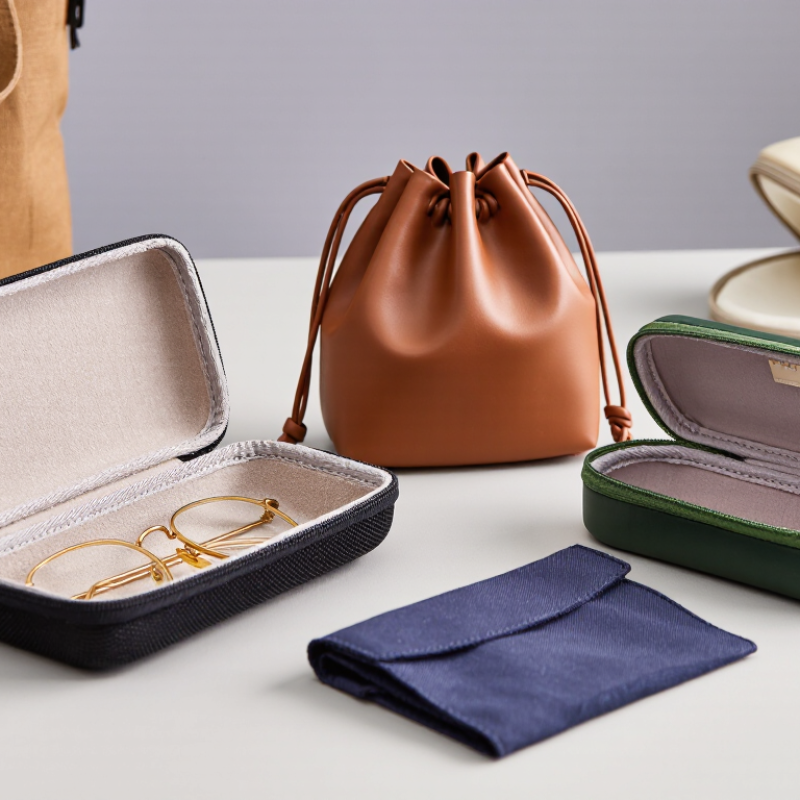
Soft microfiber pouches protect glasses with a light, flexible layer that slips easily into a pocket or bag. Their fibers can measure finer than one denier. Denier describes the weight of a fiber relative to its length, so a lower number indicates a finer strand. These tiny fibers create a soft surface that can lift light fingerprints and dust from lenses when the pouch is clean.
That softness helps, but it is not magic. A pouch that has gathered grit can scratch a lens if you rub it across the surface. Check the inside now and then, and wash it according to its care instructions. Let it dry fully before storing your glasses. A damp pouch can feel unpleasant and may trap residue. Small details matter.
Microfiber pouches are useful for everyday carrying, especially when bulky cases are inconvenient. Still, they offer less impact protection than a rigid case. If glasses are loose beside keys or a heavy charger, the pouch may not prevent pressure damage. I would treat it as a gentle cover and occasional cleaning aid, not complete protection. The distinction is easy to overlook.
Denier measures the mass in grams of 9,000 meters of fiber. Microfiber is commonly defined as fiber finer than 1 denier.
These are denier reference points, not measurements of specific pouch products. Finer fibers can create a soft lens-contact surface; keeping the pouch clean and lint-free also helps protect lenses.
Drawstring fabric pouches are light and easy to open, but their seams and cloth take repeated strain. A pouch may snag on a bag zipper or stretch when pulled from a crowded pocket. Look beyond fabric feel. ASTM D5034 measures textile breaking force and elongation with a grab test, giving buyers comparable strength results when samples are tested consistently. It does not set one universal pass mark for every pouch.
For a useful check, test fabric from the pouch body and record the force at break, elongation, fabric direction, and test conditions. Then assess the drawcord channel and seams separately; ASTM D5034 does not measure finished-pouch durability. Small samples can hide weak stitching. That matters.
Textile Exchange’s Materials Market Report 2024 estimates global fiber production reached 124 million tonnes in 2023. This scale makes material traceability relevant, but production volume says nothing about an individual fabric’s strength. Ask suppliers for test reports tied to the actual fabric lot, not a similar-looking swatch. Compare results across samples, and inspect for fraying after testing. A high breaking force can still accompany a pouch that feels stiff or awkward to draw closed.
A zippered glasses pouch should protect lenses without making access awkward. The zipper is a small part, but its failure can leave glasses exposed. ASTM D2061, Standard Test Methods for Strength Tests for Zippers, provides methods for evaluating zipper components, including chain, stops, and slider-related strength.
It does not set one universal pass value for every pouch. That matters: a result should be judged against the pouch’s intended use, not an invented industry-wide threshold.
For a practical comparison, test identical pouches under the same conditions and record peak force in newtons, failure location, and whether the slider still runs smoothly. As a small-batch screening plan, compare 10 samples per design and report the median and range; this is a suggested sampling approach, not an ASTM requirement.
A sharp pull at the zipper end may reveal weak stitching that a gentle opening test misses. The weak point may be the seam, not the teeth. Check both.
ASTM D2061 supports structured strength testing, but handling tests still matter: a pouch carried daily faces repeated opening, twisting, and pressure inside a bag. Results are useful only when the test setup and sample details are recorded.
I would not treat one strong specimen as proof. That is easy to overlook.
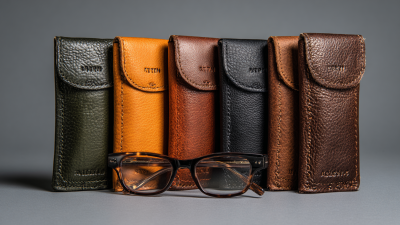
Leather and synthetic-leather pouches both add a buffer against light scuffs and desk dust. Their surfaces behave differently. Finished leather often feels supple and may develop a patina, but its coating can scratch, and moisture can leave marks. Synthetic leather, commonly made with a polymer surface, is usually easier to wipe clean. Repeated folding may cause some coatings to crack or peel. Small details matter. A soft lining and secure stitching help keep grit away from lenses; the outer material alone cannot prevent every scratch.
Grand View Research estimated the global synthetic leather market at USD 31.09 billion in 2022 and projected 7.4% annual growth from 2023 to 2030. That market figure describes demand, not pouch durability.
For a more useful comparison, ask suppliers about abrasion or flex testing, and check whether results apply to the finished pouch material. ASTM D3884 evaluates fabric abrasion, but it does not measure lens protection during everyday carrying. Not perfect. A pouch with a smooth, clean lining may protect glasses better than a tougher-looking shell with rough seams or trapped grit. Examine the inside, especially around the closure, before choosing.
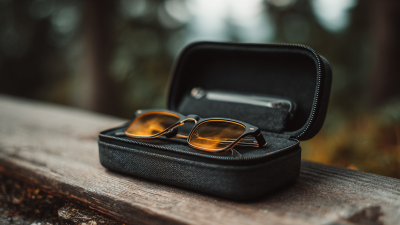
Hard-shell eyewear cases protect glasses differently from soft fabric pouches. Their molded shells can resist crushing, while a padded lining helps keep lenses away from the interior surface. But a sturdy feel in the hand does not prove reliable drop protection. The details matter.
ASTM D5276 describes free-fall drop testing for loaded containers. For an eyewear case, a test plan can place glasses or a representative weighted dummy inside, then drop the closed case onto a specified surface. Record the drop height, impact orientation, and number of drops. Test likely weak points, such as a corner, hinge edge, and broad face. Keep the setup consistent. ASTM D5276 does not provide one universal height that guarantees protection for every case; test conditions should match the intended use and risk.
After each impact, check whether the latch still closes, the shell has cracked, or the lining has shifted. Inspect the lenses for contact marks and the frame for bending. A case may survive one dramatic drop yet fail after repeated impacts. That distinction is easy to miss. Results also depend on the sample, surface, and test setup, so report those details rather than calling a case simply “drop-proof.” A practical test gives useful evidence, not certainty.
| Type | Typical construction | Protection characteristics | Portability and storage | Drop-performance considerations | Best suited for |
|---|---|---|---|---|---|
| Soft drawstring pouch | Flexible woven fabric, microfiber, or similar soft material; closes with a drawstring or fold-over opening. | Helps reduce dust, smudges, and light surface abrasion. Offers little resistance to crushing or concentrated impact. | Lightweight and easy to fold; takes up little space when empty. | Generally provides limited impact cushioning. A drop assessment should check whether the eyewear contacts the ground or is damaged inside the pouch. | Storage inside a larger bag and light scratch protection. |
| Microfiber cleaning pouch | Soft microfiber fabric, often made from fine synthetic fibers; may also be used to wipe lenses when clean and dry. | Can help remove fingerprints and light dust from compatible lenses. Does not provide rigid structural protection. | Very compact and suitable for carrying with eyewear. | Not designed to protect eyewear from significant drops, compression, or heavy objects. | Lens cleaning and basic protection from surface contact. |
| Padded soft case | Flexible outer fabric with a foam or quilted lining and a zipper, flap, or hook-and-loop closure. | Provides more cushioning than an unpadded pouch, but its flexible walls can still compress under pressure. | Usually lighter and more compressible than a rigid case. | May reduce minor impacts; performance depends on padding thickness, seams, closure, and the fit of the eyewear. | Everyday carrying when compactness matters and crushing risk is limited. |
| Semi-rigid case | Flexible textile or synthetic outer layer over a molded or reinforced insert. | Offers more shape retention than a soft case while remaining somewhat flexible. | Typically bulkier than a pouch but lighter or more compressible than many hard cases. | The insert can help distribute impact, but protection varies with shell rigidity, padding, and closure security. | Daily travel and storage in a backpack or handbag. |
| Hard-shell eyewear case | Rigid molded shell, commonly made from a thermoplastic or covered rigid structure, with an interior lining. | Resists ordinary compression better than flexible pouches and helps keep objects away from the lenses and frame. | Usually holds its shape and occupies more space than a soft pouch. | The rigid shell can help distribute impact, but actual drop protection depends on shell material, wall design, seams, closure, interior fit, and the impact surface. | Higher-risk carrying situations, such as a packed bag or frequent travel. |
ASTM D5276 note: ASTM D5276 is a free-fall drop-test method for loaded containers. Applying it to a small eyewear case requires a defined test plan, including the loaded case configuration, drop height, impact surface, drop orientations, sample conditioning, and acceptance criteria. The standard does not by itself establish a universal pass level or guarantee that a case will protect eyewear in every real-world drop. Reported performance should be based on documented testing of the specific case design.