What Are the Best Eyeglass Nose Pads in 2026?

Eyeglass Nose Pads may look like minor parts, but they shape how glasses sit, feel, and stay in place. The Vision Council’s 2023 Consumer inSights report found that 76% of U.S. adults use some form of vision correction. That figure does not identify the best nose pad, but it shows how many people depend on comfortable eyewear every day.

A pad that presses too firmly can leave marks near the bridge of the nose. One that slips may send frames sliding during a commute or while reading. Small details matter. Silicone pads often feel soft and provide grip, while harder materials may suit people who prefer a firmer, easier-to-clean contact point. Shape, size, frame weight, skin sensitivity, and maintenance all affect comfort. Material alone cannot tell the whole story.

This guide compares common pad styles and materials, with practical attention to fit, durability, and replacement. It also considers how adjustable arms and pad dimensions can change pressure on the nose. Fit is personal. A recommendation that works for a lightweight frame may fail with heavier lenses. The available research has limits: consumer surveys describe eyewear use, not controlled tests of individual nose pads. For persistent pain, redness, or slipping, an optician can check frame alignment and suggest a suitable replacement. The best choice should feel secure without demanding constant adjustment.
What Are the Best Eyeglass Nose Pads in 2026?

What Are Eyeglass Nose Pads, and How Do They Work?

Eyeglass nose pads are the small contact points that rest on either side of the nose. They help support the frame, spread its weight, and keep the lenses aligned with your eyes. A well-fitted pair should feel steady without pinching. Small parts, noticeable difference.

Pads may be separate and adjustable, or molded directly into the frame. Separate pads can often be moved slightly to change the frame’s height or width on the nose.

Materials such as silicone and hard plastic feel different against the skin, and neither suits everyone. Oil, sweat, and everyday dust can also make pads slippery or uncomfortable over time. Fit matters more than appearance.

Tips: Check for red marks or sliding after wearing your glasses for a while. Clean the pads gently with a soft cloth and mild soap, then dry them fully. If a pad is loose, cracked, or uneven, ask an optician to assess it rather than bending the frame yourself. Adjustments can be delicate; even a small change may shift how the lenses sit.

Which Nose Pad Materials, Shapes, and Mounting Styles Are Available?

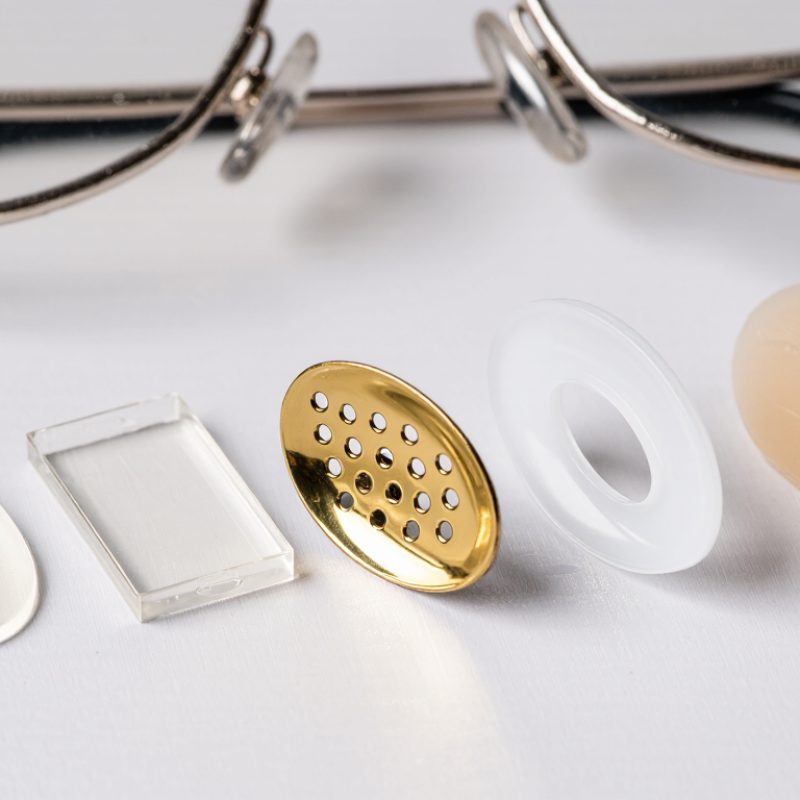
Eyeglass nose pads come in silicone, PVC, and harder materials such as acrylic. Silicone feels soft and often grips well, which can help when frames slide during warm weather. It may also collect skin oils and need regular cleaning. Firmer pads can feel stable, but pressure may become noticeable on the bridge of the nose. Comfort depends on fit, not just material.

Shapes affect contact and pressure. Oval pads are common, while teardrop and round designs suit different frame structures and nose bridges. Wider pads spread weight across more skin; smaller ones may fit narrow spaces but leave pressure points. A useful check is whether both pads rest evenly without pinching. Small misalignments matter.

Mounting styles include screw-in pads, push-in fittings, and adhesive pads. Screw-in types allow adjustment and replacement, but the frame must have compatible mounts. Push-in pads can be convenient, though their fit varies by frame. Adhesive pads can add cushioning to frames without traditional mounts, but they may loosen and leave residue. Not every frame can use every style. A qualified optician can check alignment and adjust suitable pads; guessing at the mount can make a good frame feel worse.

What Are the Best Eyeglass Nose Pads in 2026? — Nose Pad Materials, Shapes, and Mounting Styles
Category Option Typical Characteristics May Suit Fit and Care Notes
Material Silicone Soft and flexible, with a tackier feel than hard plastic. Commonly used for replaceable nose pads. People seeking a cushioned contact surface or improved grip. Can collect skin oils and residue; clean regularly with mild soap and water, then dry thoroughly.
Material Polyvinyl chloride (PVC) A flexible plastic used in some soft nose pads. Its feel and flexibility vary by formulation. People looking for a soft, replaceable pad option. Check product compatibility and material information, particularly if you have a known sensitivity.
Material Polyurethane foam Compressible foam that can provide a soft, cushioned contact surface. People who prefer a padded feel or need a temporary comfort adjustment. Foam may wear or absorb oils faster than solid pads; replace it when it becomes damaged or difficult to clean.
Material Hard plastic Firm, smooth, and generally less compressible than soft pads. Often found on frames with molded or integrated supports. People who prefer a stable, firm contact surface. May feel less cushioned. Integrated pads generally cannot be replaced separately from the frame.
Material Metal Some frames use metal support arms; the part touching the nose may be covered by a separate pad or may be part of an integrated design. Wearers whose frame design calls for adjustable metal pad arms. Metal support arms and the pad material are separate considerations. Have frame adjustments made carefully to avoid damage.
Shape Oval An elongated shape with rounded ends; a common form for replaceable pads. Frames with a conventional pad-arm layout and wearers who want a broad, simple contact area. Check the pad’s length, width, and attachment type against the existing frame.
Shape Teardrop Narrower at one end and wider at the other, allowing the pad to be oriented to match its support. Frames designed for teardrop pads and wearers who need a particular pad orientation. Match both the shape and orientation of the original pad; shape alone does not establish compatibility.
Shape Round A compact circular contact surface, available in different sizes and thicknesses. Frames designed for round pads or wearers who prefer a small contact area. Confirm diameter and mounting method before ordering replacements.
Shape Wing or broad-contact style A wider or more contoured design intended to spread contact over a larger area; exact profiles vary. Wearers seeking a broader contact surface, provided the frame supports that pad design. These pads are not universal. Confirm that the shape clears the frame and fits the support arms.
Mounting style Screw-in The pad attaches to a pad arm using a small screw and a matching mounting feature. Frames with screw-mounted pad arms and people who want replaceable pads. Requires a compatible screw and pad. A small optical screwdriver may be needed; avoid overtightening.
Mounting style Push-in or press-fit A post or plug on the pad fits into a matching opening in the frame or pad arm. Frames specifically made for a press-fit pad connection. Post size and shape must match the socket. Do not force a pad that does not seat easily.
Mounting style Slide-on or clip-on The pad or its carrier slides over or clips onto a compatible support. Frames with a matching rail, tab, or clip-style mount. Attachment designs differ between frames; verify the connection before purchasing replacements.
Mounting style Adhesive A self-adhesive pad attaches directly to a clean, smooth frame surface without a pad arm. Some frames with fixed contact areas, or as a temporary adjustment where appropriate. Adhesion depends on surface cleanliness and shape. Follow the product instructions and remove residue carefully.
Mounting style Integrated or molded The nose support is formed as part of the frame rather than attached as a separate replaceable pad. Frames designed with a fixed bridge or molded nose supports. The support itself is not a separate replacement pad. A qualified optical professional can advise on fit adjustments.
Fit factor Size and thickness Pad dimensions and thickness affect contact area and how the frame sits; there is no single size that fits every frame. Anyone replacing pads or fine-tuning frame contact. Compare the original pad and mount, and adjust the frame professionally if it sits unevenly or causes persistent pressure.
Fit factor Best choice depends on the frame Material, shape, and mounting style work together; a comfortable material will not fit if its mount is incompatible. All wearers choosing replacement or aftermarket pads. Use the frame’s existing pad type as the starting point. For uncertainty, consult an optician or qualified eyewear professional.
General guidance: Nose pad designs and compatibility vary by frame. These descriptions are informational, not a substitute for a professional fit assessment.

How Do Nose Pads Affect Comfort, Fit, and Durability?

Nose pads affect comfort by spreading a frame’s weight across the bridge instead of pressing it into one small area. A broad, well-aligned pad can reduce pressure marks during a long workday. Soft silicone often feels gentle against skin, while firmer materials may keep their shape longer. Neither choice suits everyone. Skin sensitivity, perspiration, and frame weight all matter. If the pads sit unevenly, one side may pinch while the other slips. That small imbalance can be easy to miss until your nose feels sore.

Fit also influences how clearly you see. Pads set too far apart may let glasses slide; pads set too close can leave red marks. Adjustable arms allow an optician to change the angle and spacing without forcing the frame to sit crooked. For a quick check, look for even contact and a stable position when you nod. Durability depends on material, daily cleaning, and how securely each pad attaches. Sweat and skin oils can make surfaces slick or cloudy over time, so rinse them gently and dry with a clean cloth. Replacement is sometimes needed sooner than expected. That is not always a frame problem. If slipping or pressure continues, a professional adjustment is more reliable than bending parts at home.

What Are the Best Eyeglass Nose Pads in 2026?

The best eyeglass nose pads in 2026 are the ones that fit your frame and face, not simply the softest ones. The Vision Council’s 2023 Consumer inSights report found that 76% of U.S. adults use some form of vision correction, making everyday comfort a practical concern for many wearers. That figure does not compare nose-pad materials, so it cannot prove one type is best. Fit comes first.

Silicone pads often feel cushioned and can improve grip, while firmer plastic pads may suit people who prefer a less yielding contact. Adjustable screw-in pads allow an optician to refine the angle and spacing; adhesive pads can help with some frames, but may loosen or leave residue. Small parts matter. Look for even contact on both sides of the nose, with no pinching, slipping, or persistent red marks after wear. A pad that feels comfortable for five minutes may still press during a full workday. I would not treat softness as a universal win: skin sensitivity, frame weight, and pad shape all change the result. Ask an optician to check the fit, especially if your glasses keep sliding or leave soreness.

What Are the Best Eyeglass Nose Pads in 2026?

Typical cushioning by nose-pad material

How to read this: Silicone and foam pads generally provide more cushioning, while PVC and hard plastic pads tend to feel firmer. Ratings are qualitative comparisons, not standardized laboratory measurements; fit, pad shape, and adjustment also affect comfort.

How Can You Choose, Replace, and Care for Nose Pads?

Choosing nose pads starts with fit, not appearance. Silicone pads feel soft and grip well, while firmer plastic pads can suit people who prefer less cushion. Check that both pads touch your nose evenly and that the frames sit level without pinching. Fit comes first. If the pads leave red marks, slide down, or make your lenses sit too close, ask an optician to adjust them. The WHO’s World report on vision estimates that at least 2.2 billion people have near or distance vision impairment; nose pads cannot correct vision, but stable frames can help keep lenses properly positioned.

For replacement, match the pad shape and attachment type, then use a small screwdriver or suitable tool without forcing the screw. Replace pads that are yellowed, cracked, sticky, or loose; worn surfaces can irritate skin and let frames slip. Keep it gentle. Wipe pads daily with clean water and a little mild soap, then dry them with a soft cloth. Avoid hot water and harsh cleaners, which may damage coatings or soften materials. Small adjustments can feel uneven at first; if one pad still presses harder, stop and have an optician check the alignment.