China Best Eva Case Manufacturer How to Choose?

Choosing the right China Eva Case manufacturer requires more than comparing prices on a supplier website. A reliable partner should understand protection, portability, branding, and production consistency. The best Eva Case is shaped around its real use, not only its appearance. It should protect delicate equipment from pressure, dust, moisture, and repeated handling. Materials also deserve close attention. A manufacturer should clearly explain the EVA foam density, fabric options, zipper quality, lining, and edge finishing.

Experience matters here. Ask whether the factory has produced similar cases for electronics, tools, medical devices, or outdoor equipment. Request physical samples, not only polished photographs. Samples reveal truth. Check the case after opening it repeatedly, pressing the shell, and placing the product inside. Observe loose threads, uneven seams, unpleasant odors, weak zippers, and inaccurate dimensions. These small details often become expensive problems during mass production.

A professional supplier should provide drawings, prototypes, inspection records, and realistic production timelines. Clear communication is equally important, especially when measurements or logos change. Factory audits, quality-control procedures, and material documentation can strengthen confidence, but none replaces practical testing. A low quotation may hide thinner materials or unstable workmanship. That possibility deserves honest consideration. Even experienced buyers can overlook packaging, replacement rates, or shipping damage. Choosing a China Eva Case manufacturer should therefore involve evidence, regular inspection, and written specifications. The goal is not simply to find the cheapest factory. It is to build a dependable supply relationship that delivers consistent protection and acceptable value.
China Best Eva Case Manufacturer How to Choose?

What Is an EVA Case and Why Does Manufacturer Choice Matter?

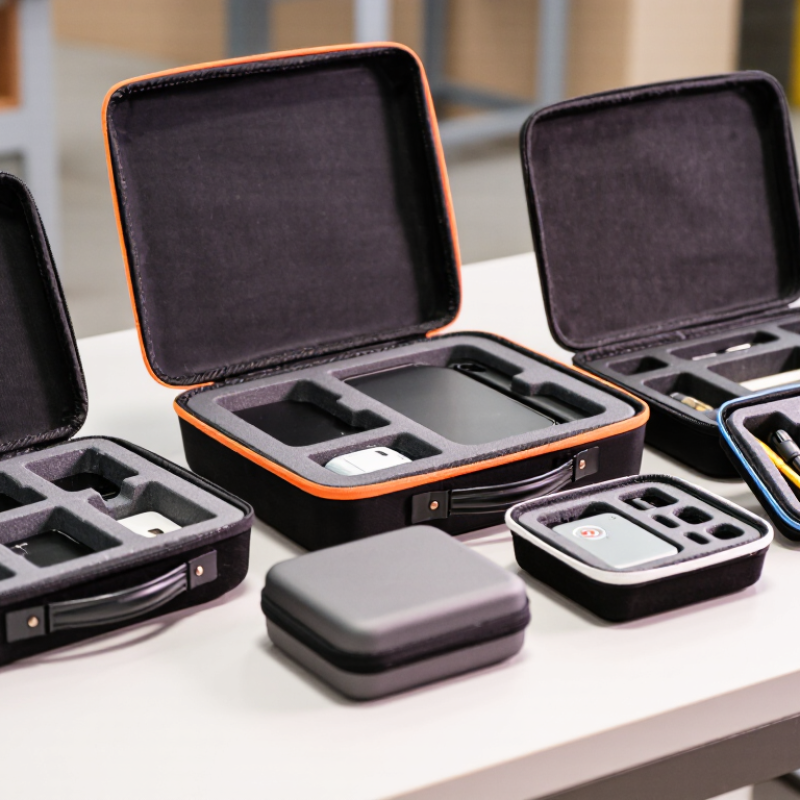
An EVA case is a protective container made from ethylene-vinyl acetate, a lightweight and flexible foam material. Its molded shell resists scratches, moisture, and everyday impact. Inside, a fitted lining can hold equipment firmly and prevent movement during transport. Zippers, handles, seams, and ventilation details also affect its practical value.

Choosing the manufacturer matters because material quality and production control vary widely. An experienced factory should explain EVA density, shell thickness, foam structure, and surface finishing clearly. It should provide samples before mass production and check dimensions with reliable tools. I have learned that a low quotation can hide weak zippers, uneven edges, or a strong chemical odor. That lesson is easy to overlook. Production records, inspection photos, and clear communication make quality easier to verify.

Tips: Request a physical sample. Test the zipper repeatedly. Press the shell by hand. Check odor, stitching, fit, and logo placement. Ask how rejected units are handled. A dependable manufacturer welcomes specific questions and documents corrections. It should also confirm packaging, delivery schedules, and customization limits in writing. Mistakes can still happen, even with careful teams. The important point is whether the supplier notices them, reports them, and fixes them before shipment.

Which Materials and Manufacturing Standards Should You Evaluate?

Choosing a China EVA case manufacturer starts with material verification, not attractive samples. Grand View Research estimated the global EVA market at about USD 10.4 billion in 2023, with continued growth through 2030. That growth increases supplier choices, but not necessarily quality.

Ask for EVA density, hardness, cell structure, and compression-set results. A protective case should feel resilient, not merely soft. ASTM D2240 can verify Shore hardness, while ASTM D395 helps assess permanent deformation after compression. For repeated opening, inspect hinge fatigue, edge bonding, zipper strength, and odor after heat exposure. Small details matter. Some suppliers quote “EVA” without stating its grade or foam ratio. That is a warning.

Manufacturing controls deserve equal attention. ISO 9001-based quality systems should connect incoming-material checks with mold inspection, dimensional sampling, and final packing records. Request batch traceability and at least three production samples. Compare measurements, not promises. The International Organization for Standardization reports millions of ISO 9001 certificates worldwide, yet certification alone cannot prove case performance. It is only a framework. Independent testing against applicable chemical and environmental requirements adds reliability. I would also examine color variation, wall thickness, and deformation after shipping. My own caution is simple: a perfect first sample can hide inconsistent mass production. Evaluate the factory floor, not just the catalogue.

How Can You Compare EVA Case Design, Protection, and Customization?

Choosing an EVA case manufacturer in China requires more than comparing prices. Study the case design from the inside out. A reliable supplier should explain foam density, wall thickness, hinge structure, zipper quality, and edge finishing. Inspect whether the shell fits the device without forcing the lid. Poor alignment can create pressure points. Ask for drawings and a physical sample before approving production.

Protection depends on more than hard fabric. The EVA shell should absorb impact, while molded inserts prevent movement. Check corner coverage, lining softness, and clearance around buttons, screens, or connectors. Request practical test details, including drop height, sample quantity, and failure criteria. Photos are not enough. A case can pass one test and still fail after repeated use. That weakness is easy to miss. Look for inspection records, material consistency, odor control, and clean stitching across batches.

Customization should improve function, not merely add a logo. Discuss colors, printing, pull tabs, elastic straps, pockets, and foam layouts. Provide exact product dimensions and usage conditions. Small measurement errors can make a custom case unusable. An experienced engineering team should suggest tolerances and revise the prototype. Do not accept every suggestion blindly. Some decorative finishes increase cost without improving protection. Compare sample quality, communication speed, revision discipline, and delivery records together. The cheapest quotation may hide thinner foam or weaker hardware. Keep written specifications, because memory changes during production.

What Quality Certifications and Production Controls Should You Verify?

When choosing a China EVA case manufacturer, verify quality certifications and production controls beyond attractive samples. Ask for current ISO 9001 documentation, including its scope, certificate number, issuing body, and expiration date. The scope should cover the factory’s actual manufacturing activities, not only office management. For export markets, request relevant material test reports, such as RoHS or REACH documentation, when applicable. Check whether reports identify the exact EVA grade, color, and production batch.

On the factory floor, inspect incoming material checks, hardness testing, density control, and dimensional measurements. Ask how workers control cutting accuracy, bonding strength, zipper attachment, and surface defects. A reliable factory should use calibrated equipment and keep inspection records. It should also provide batch traceability from raw sheets to packed cases. Sample retention and documented corrective actions show stronger process discipline. I have found that small details matter. Uneven edges often reveal weak controls.

Tips: Request a recent pre-shipment inspection record and a blank inspection checklist. Compare those records with your approved sample. Ask for photos of testing equipment in use, not only equipment lists. Confirm how failed products are isolated and reworked. Do not accept certificates as proof of consistent quality. They can expire, cover another facility, or miss product-specific risks. A factory may pass an audit yet still need tighter control over color matching or odor. That gap deserves honest discussion before mass production.

China Best EVA Case Manufacturer How to Choose? – What Quality Certifications and Production Controls Should You Verify?

Verification Dimension What to Verify Recommended Evidence Practical Acceptance Guidance
Quality management system Confirm that the manufacturer operates a documented quality management system covering design, purchasing, production, inspection, nonconformity control and corrective action. A valid ISO 9001 certificate, certification scope, factory address, issuing certification body and audit status. Verify the certificate directly through the certification body or its public database. The scope should cover the relevant case manufacturing activities.
Environmental management Assess controls for waste, adhesives, solvents, energy use, wastewater and disposal of production materials. ISO 14001 certificate where environmental management is a procurement requirement; environmental procedures and waste records. Treat ISO 14001 as an environmental-system qualification, not as proof that every finished product is compliant with a specific chemical regulation.
Restricted substances Check EVA foam, fabric, zippers, thread, coatings, inks, adhesives and molded components for restricted substances required by the destination market. Recent laboratory test reports, supplier declarations, material composition records and a controlled bill of materials. Define the applicable requirements, such as RoHS or REACH-related restrictions, in the purchase specification. Confirm that reports identify the tested material and current product version.
Product safety regulations Determine whether the case contains components or packaging subject to the regulations of the target market, especially for children’s products, electronics accessories or consumer goods. A documented regulatory assessment and applicable test reports rather than a generic declaration of compliance. Do not assume that a general product certificate covers all markets. Match the test plan to the intended use, age group, materials and destination country.
Incoming material inspection Verify inspection of EVA sheets, fabric, lining, mesh, zippers, sliders, handles, labels, adhesives and molded parts before production. Incoming inspection records, approved supplier list, material specifications, lot identification and quarantine procedures. Materials should be traceable to supplier lots and released only after they meet the approved specification for color, thickness, density, appearance and functional requirements.
Material and color consistency Control EVA hardness, thickness, density, fabric color, surface finish and lining characteristics between production lots. Approved reference sample, technical data sheet, calibrated measuring tools and lot-based inspection records. Set numerical tolerances in the approved specification. Visual approval alone is insufficient for thickness, hardness or dimensional characteristics.
Cutting and forming control Check cutting-die accuracy, edge quality, panel alignment, molding temperature and forming repeatability. Approved drawings, first-piece approval, machine-setting records, in-process inspection and maintenance logs. Critical dimensions should be measured against the drawing. Reject parts with major deformation, exposed foam, uneven edges or misaligned panels.
Bonding and adhesive control Review adhesive type, storage life, surface preparation, application quantity, curing time and operator controls. Adhesive technical data sheet, batch records, expiry checks, work instructions and peel or bond-strength test results. Define the required bond performance for the actual materials. Inspect for lifting, bubbling, open seams, adhesive bleed-through and excessive odor after curing.
Zipper, handle and stitching controls Verify zipper smoothness, stitch density, seam allowance, reinforcement points, handle attachment and hardware security. Sewing specifications, first-piece approval, seam inspection records and functional checks on finished assemblies. Specify zipper cycle testing, pull-force requirements and stitch tolerances according to intended use. No skipped stitches, loose threads or sharp exposed hardware should be accepted.
Dimensional and fit inspection Confirm external dimensions, internal usable space, wall thickness, pocket location and fit with the stored product. Controlled drawings, inspection gauges, measurement reports and a retained approved sample. Measure critical features using a defined method and tolerance. Perform a fit check with the actual product or an approved dimensional substitute.
Mechanical performance testing Assess compression resistance, drop resistance, handle strength, zipper durability and protection of the intended contents. Written test methods, equipment records, test conditions, sample identification, results and corrective-action reports. Use test levels based on product weight, transport conditions and expected handling. Record pass/fail criteria before mass production.
Appearance and workmanship inspection Inspect surface defects, stains, scratches, wrinkles, color variation, printing quality, loose threads, deformation and odor. Defect classification standard, golden sample, inspection checklist and photographic records for nonconforming products. Classify defects as critical, major or minor and define permitted quantities in the purchase agreement. Use consistent lighting and inspection conditions.
Final inspection and sampling plan Confirm that finished goods are inspected before packing and shipment using a documented sampling method. Final inspection report, lot size, sample size, defect results, photographs and release authorization. Specify the sampling standard and AQL levels contractually. AQL is a sampling tool, not a substitute for agreed product specifications or functional testing.
Traceability and change control Ensure that production lots can be linked to materials, operators, machines, inspection records and shipment cartons. Lot codes, production records, retained samples, change-control procedure and documented approval for material or process changes. Require advance notification and approval for changes affecting foam, fabric, adhesive, tooling, dimensions, suppliers or production location.
Calibration and testing equipment Check whether measuring and testing equipment is suitable, identified, maintained and calibrated at defined intervals. Calibration certificates, equipment register, maintenance records and out-of-calibration procedures. Calibration should be traceable to recognized national or international measurement standards where applicable.
Corrective and preventive action Evaluate how the manufacturer investigates defects, identifies root causes and prevents recurrence. Nonconformity reports, root-cause analysis, corrective-action plans, effectiveness checks and customer complaint records. The response should address the process cause, not only sorting or replacing defective units. Verify closure with objective evidence.
Pre-shipment and packaging control Verify carton quantity, protective packaging, labels, barcodes, moisture protection and shipping marks. Packing specification, carton inspection record, approved artwork, loading photographs and quantity reconciliation. Packaging must protect the cases during expected transport and storage. Confirm that carton markings and quantities match the purchase order.

Buyer’s note: Certification validity, test scope, product specifications and acceptance criteria should be verified for the actual factory, material configuration, intended use and destination market. A certificate alone does not guarantee consistent product quality.

How Do Pricing, Capacity, and Service Determine the Best Manufacturer?

China Best EVA Case Manufacturer: How to Choose?

Pricing, capacity, and service reveal more than a low quotation. A reliable manufacturer explains material grades, mold fees, sampling costs, packaging, and shipping terms clearly. Ask for a complete cost breakdown before approving production. A cheaper quote may exclude tooling changes or inspection fees. That difference can damage your budget later.

Capacity should match your real order plan.

Request monthly output, current production schedules, and typical lead times. A capable factory should provide recent sample photos, quality records, and practical production advice. Visit the facility when possible, or arrange a live video inspection. Check cutting machines, forming equipment, sewing lines, and final inspection stations. Large capacity is not always better. Overloaded workshops may miss small details, especially during peak seasons.

Service becomes visible when problems appear.

Test response speed with technical questions about zipper strength, foam thickness, logo placement, and compression protection. Good engineers explain limitations instead of promising everything. Ask how they handle defective samples, delayed materials, and design revisions. A small trial order can expose communication gaps before a large commitment.

No manufacturer is perfect. I have seen attractive samples fail during repeated opening tests. Clear inspection standards and written approvals reduce that risk, although they cannot remove it entirely. Choose a partner that documents changes and accepts reasonable accountability.